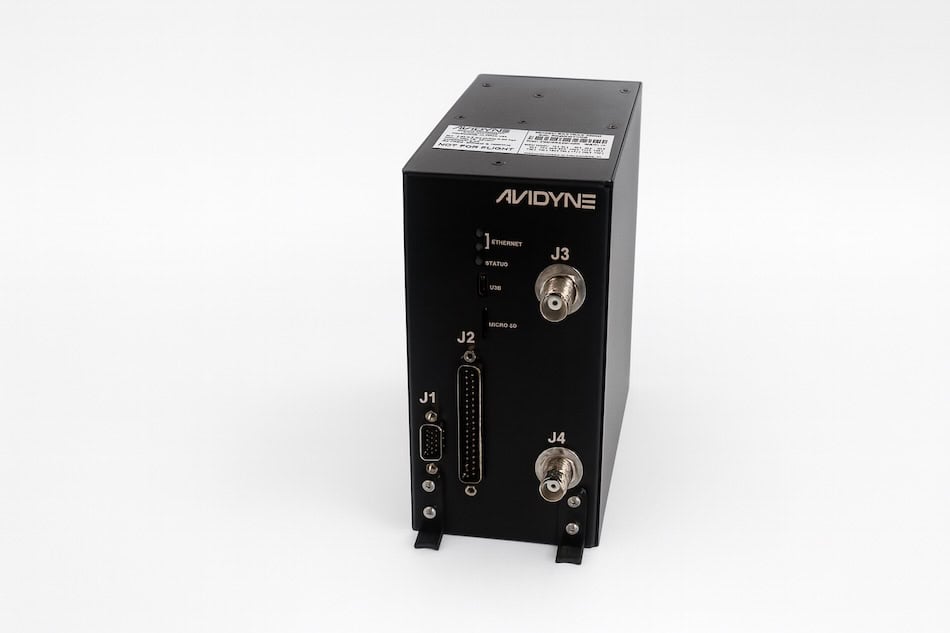
AVIDYNE’S NEW SKYTRAX 3000 IS AN IDEAL WAY TO ADD ADS-B IN TO PART 25 AIRCRAFT
The SkyTrax3000 is a dual band ATAS alerting enabled ADS-B In solution compatible with transponders, TCAS II, and displays in Part 25 aircraft.
Melbourne, FL. – Oct 13, 2025
Avidyne today announced the SkyTrax 3000, a dual-band ADS-B In system designed to add modern surveillance capabilities without expensive cockpit overhauls. The TSO-certified system delivers enhanced traffic alerting, comprehensive weather data, and future-ready ADS-B In functionality—all without modifications to currently installed Part 25 TCAS II avionics or displays. Building on 30 years of surveillance system expertise, the SkyTrax 3000 integrates TCAS II, ADS-B In, and TIS-B traffic, ATAS alerts, and FIS-B weather into a complete situational awareness solution.
“Part 25 aircraft owners and operators have long awaited a cost-effective dual-band ADS-B In solution” said Avidyne President Fabrice Kunzi. “The SkyTrax 3000 provides pilots with a complete traffic picture based on TCAS surveillance as well as 1090MHz and UAT ADS-B In. Combined with the ATAS traffic alerting algorithm this complete traffic picture provides significant benefits over legacy TCAS systems, such as alerts at lower altitudes, more informative aural alerts, and fewer nuisance alerts.”
Since the SkyTrax 3000 includes dual-band capability, it can receive position information directly from all ADS-B out compliant aircraft, unlike hybrid TCAS II systems which only receive ADS-B messages on the 1090MHz channel. It also receives TIS-B uplink when in view of ADS-B ground stations, which provide additional coverage of aircraft not broadcasting ADS-B Out messages.
Background: Why Dual-Band ADS-B In Matters
Although TCAS II has undergone several upgrades since its original design in the late 1980s and early 1990s, the alerting concept and system limitations have remained largely the same. Legacy TCAS II surveillance measures the range to other aircraft by interrogating a Mode A, C or S transponder, and, if available, decodes the altitude received in the reply. Using this range and altitude information, TCAS II must then make an alerting decision – whether the conflicting aircraft is sufficiently close to justify directing the pilot’s attention to the situation via an aural and visual alert. While knowing range and altitude about a conflicting aircraft was a significant improvement over not knowing where other aircraft are, with only two parameters TCAS II must alert against large protection volumes, which often results in unnecessary alerts. In some cases (i.e. near to the ground), the large protection volumes required suppressing alerts to avoid excessive nuisance alerting.
The introduction of ADS-B addressed the fundamental issue of limited data availability: Broadcasting once per second, ADS-B provides latitude and longitude, altitude, velocities, heading, and much more information, significantly expanding the amount of information available about any equipped aircraft. The integration of the SkyTrax 3000 alongside a TCAS II system leverages this new and improved data to directly address some of the limitations of legacy TCAS II systems and provides a significant advancement in safety and capability: a reduction in nuisance alerts, a more informative aural traffic call-out, a more complete traffic picture, and alerts available below the TCAS II minimum alerting altitude of 500ft AGL.
When issuing Traffic Advisories (TAs) – as distinct from Resolution Advisories (RAs) – ADS-B’s improved data quality allows for more precise alerting than what is possible with just range and altitude. This concept was originally introduced as part of the FAA funded ADS-B Based Traffic Alerting (ATAS) program where MIT and Avidyne developed the TSO-C195 ATAS avionics standard, prototype hardware and executed the flight test and validation campaign. As shown during that project, when ADS-B data is available, protection volumes can be optimized to take advantage of this improved data while also explicitly taking current and predicted encounter dynamics into account. This results in significantly improved alerting in high density environments, in particular in the airport environment where aircraft are near each other and large protection volumes drive high rates of nuisance alerts.
Another feature introduced by the MIT project were detailed aural annunciations to aid the flight crew in visual acquisition of the conflicting traffic. Where TCAS II systems annunciated a Traffic Alert (TA) with “Traffic, Traffic!”, the SkyTrax 3000 announces “Traffic! Twelve O’clock, Same Altitude, 2 Miles!”. A more detailed traffic call-out provides significant advantages over a generic TA announcement. Specifically, the pilot does not need to first look at a display to gather the necessary information to then visually acquire the conflicting traffic. Instead, the aural information is sufficient to acquire traffic while keeping the pilot’s “eyes out” of the cockpit. During high-workload phases, especially during operations in the terminal environment where most mid-air collisions occur, this provides a significant safety benefit. Detailed information about traffic location also improves the probability for a pilot to acquire the correct aircraft. In dense operational environments where multiple aircraft are visible from the cockpit, narrowing down the area of interest reduces the chances that a pilot identifies an incorrect aircraft as the conflicting traffic. Lastly, after initial alerting, ATAS continues to monitor the conflicting traffic and if the situation continues to degrade, re-alerts with updated traffic information.
ATAS also provides alerts to altitudes below the minimum alerting altitudes of TCAS II. TCAS II does not provide Resolutions Advisories below 1,000ft, and suppresses the aural portion of Traffic Advisories below 500ft. Given the higher quality data available via ADS-B, the SkyTrax 3000 provides alerts that continue below those altitudes. Crucially, even against conflicting traffic that is not ADS-B equipped, SkyTrax 3000 provides the same protection against traffic information detected using FAA Secondary Surveillance System (SSR) radar, transmitted to the aircraft via the Traffic Information Surveillance – Broadcast (TIS-B) uplink from the ADS-B ground system. TIS-B converts and uplinks intruder data for aircraft with only a transponder into an ADS-B-like track usable by the ATAS algorithm for alerting. As a result, even after TCAS II suppresses its alerts, the SkyTrax 3000 continues to provide alerts against conflicting traffic, even if that traffic is not broadcasting ADS-B Out.
SkyTrax 3000 also provides alerts against conflicting traffic that is not on the same ADS-B frequency as the aircraft on which it is installed. Enabled by its dual-band architecture, SkyTrax directly receives ADS-B messages from aircraft on 1090MHz as well as the approximately 38,000 aircraft using 978MHz (Universal Access Transceiver, or UAT) and thus provides protection against all ADS-B aircraft nearby. The FAA’s ADS-B rebroadcast service (ADS-R) provides this service when an aircraft is operating within the service volume of an ADS-R station, but these volumes are limited in their extent and often suffer from low-altitude coverage gaps. A dual band receiver ensures that ADS-B messages are received directly instead of relying on the availability of a ground system, ensuring that alerting is provided against a comprehensive traffic picture. This, too, is crucial during low altitude operations such as during approach and landing or take-off.
A key differentiator between 1090MHz and UAT (978MHz) ADS-B systems is the availability of the Flight Information Service – Broadcast (FIS-B) aeronautical information on UAT. Aircraft equipped with only a 1090MHz ADS-B system are unable to receive the data broadcast on UAT. However, the availability of FIS-B in the cockpit provides information that can help flight crews improve their situation awareness with detailed data products about their current operational environment. FIS-B includes METARs, CONUS and regional NEXRAD, Airmen’s and Significant Meteorological Information (AIRMETs and SIGMETs), NOTAMs, PIREPs, winds and temperatures aloft, and more. With SkyTrax’s ability to receive on both 1090MHz and UAT, equipped aircraft not only receive improved traffic awareness and alerting performance, but also gain access to weather, airspace, and other operational information via FIS-B.
The combination of these features results in a significant improvement in safety and capability for operators and owners of Part 25 aircraft. The ATAS-enabled SkyTrax 3000 provides more precise and informative alerts at altitudes where a TCAS II system would no longer provide aural alerts, and against traffic that may not be visible to a TCAS II system. In addition, the dual-band architecture enables operators equipped with 1090MHz ADS-B systems to receive the meteorological and aeronautical data available via FIS-B on the UAT ADS-B frequency.
Kunzi, who recently testified as part of the NTSB investigative hearing into the DCA mid-air collision, adds: “The airborne surveillance of aircraft is something that we have been successfully doing for decades across the globe. However, recent events and industry proposals underscore the importance of a robust, future-proof surveillance and alerting system to ensure the safety of the flying public. The SkyTrax 3000 provides this solution while enabling growth to a variety of operational efficiency applications enabled by ADS-B In.”
“Avidyne has extensive experience in surveillance with more than 25,000 forward fit and retrofit surveillance products fielded to date” said Dan Schwinn, Avidyne’s CEO. “The SkyTrax 3000 is the latest, most capable version of the proven SkyTrax surveillance product family, adding additional capabilities including antenna diversity, TCAS traffic integration, additional I/O required for more complex aircraft, and TSO-compliant performance. The SkyTrax 3000 has been specifically designed to support future software enhancement for ADS-B In applications including SURF, FIM and CAVS”.
The initial STC is planned for the Hawker 800XP/850XP/900XP series and Avidyne is in discussions with STC partners to cover a wide variety of aircraft models and avionics installation variants. The SkyTrax 3000 is a lightweight, low power package that is designed to be easy and quick to install alongside existing equipment. The ability to support antenna diversity ensures performance requirements are met on larger aircraft. Figure 1 provides a high-level diagram for how SkyTrax 3000 is installed alongside existing TCAS II systems.
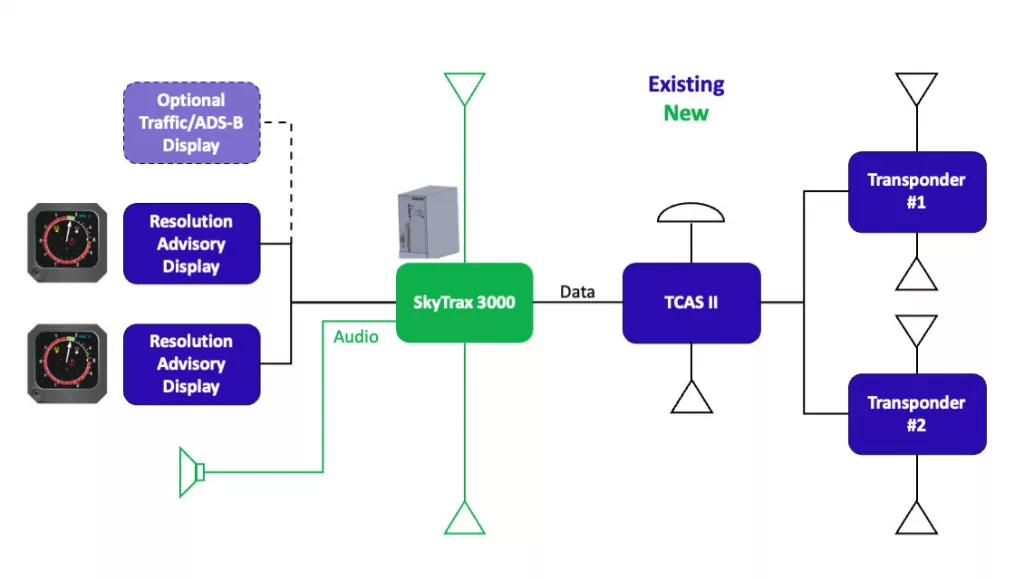
Figure 1: High-Level Diagram of SkyTrax 3000 Install
Regulatory Compliance
The SkyTrax 3000 is certified to DO-178C & DO-254 DAL B and complies with TSO-C166b, TSO-C157b, TSO-C154d, and TSO-C195b. Packaging meets ATR form factor requirements and complies with DO-160 environmental standards. For a complete datasheet, please visitwww.avidyne.com/skytrax3000. For pricing and availability, please contact Avidyne.
About Avidyne Corporation (www.avidyne.com)
Headquartered in Melbourne, Florida, Avidyne’s continuing leadership in innovation and product design make flying safer, more accessible and more enjoyable for pilots and their passengers. The company offers a full line of avionics systems for corporate, regional, military, owner-flown fixed-wing, rotor-wing general aviation (GA) and Advanced Air Mobility (AAM) aircraft.
For more information, contact:
Billy Demauro
Avidyne Corporation
bdemauro@avidyne.com